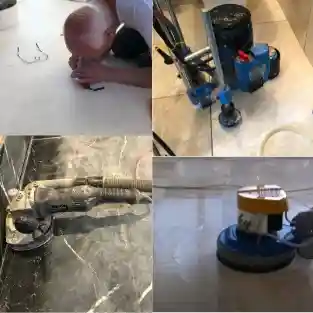
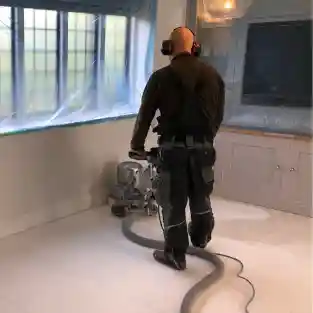
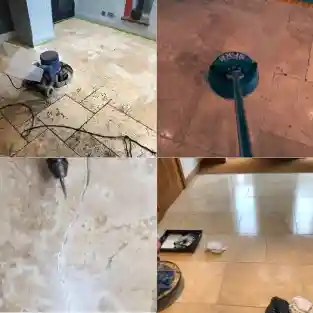
Our specialists restore and repair stone and tile surfaces in Crafton. We restore floors to a clean and beautiful condition!
We combine fixed pricing with on-time arrivals for a seamless process. We assess your floors, quote fairly, and ensure the work is done without delay.
Prevent faded floors from ruining the aesthetics of your home. Contact Victorian Tile Services now and request your free quote. Our team is ready to refresh your home's charm.
✨ Next-Generation
Tools
Our efficient equipment provides a spotless look for tiles and stone. Our techniques keep the innate beauty of your surfaces intact, turning them into a striking centrepiece.
👷♂️ Knowledgeable
Staff
With proven skills, we ensure stone surfaces are carefully restored to their natural elegance. From fixing chips to polishing, we ensure the stone’s natural beauty is maintained.
⏰ On-Time Delivery
Is Guaranteed.
We make sure to be on time, showing how much we value your time. You can depend on our precise service for a relaxed and efficient experience.
🛠️ Carefully-Crafted
Approaches.
We treat each stone with a method suited to its unique nature. Our methods are designed to meet the exact needs of your stone, ensuring proper attention and great results.
Get a fast, free stone cleaning estimate in 2 steps and enjoy revitalised, sparkling stone surfaces.
It's simple to request a free stone cleaning quote!
Call our friendly team on 07441-352-875, and they'll be happy to help.
Alternatively, you can fill out our short quote request form online, and one of our estimators will get in touch to schedule a time to survey your stone cleaning job.
Get Started
After your stone cleaning job is surveyed, we'll send you a written estimate with all the details of the stone cleaning process.
This estimate will cover all the job details, including the techniques and costs, so you can make an informed choice.
After reviewing the estimate, just send your acceptance, and we'll book the job at a convenient time for you.
Request Estimate
Our professional team will arrive on the scheduled day to make your floors shine again.
For lasting beauty, follow some basic Stone care. Dust frequently and use a pH-balanced cleaner made for Stone. Avoid any acidic substances that might damage the finish.
Taking care of your Stone floors will allow them to stay beautiful for many years.
Book Now
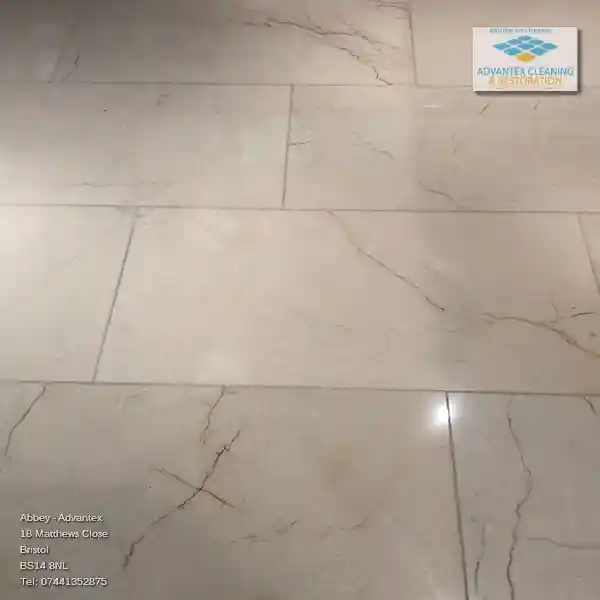
An original appearance on Marble tiles will bit by bit loose its finish. Scratches and spill damage strengthen and remove the initial shine. Ultimately, your Marble will have to be repolished.
Diamonds are used to remove the surface damage and recover the initial surface.
Almost all Marble surfaces are uneven as the Marble tiles are not installed flat. The only method to make a Marble tile floor smooth is by grinding away the lippage and uneven edges of the tiles. You should have dedicated apparatus and years of hands on experience to grind a Marble floor, nevertheless the final results are dazzling.
After grinding, the grout sits is level with the Marble tiles. The Marble floor looks monolithic, appearing to be made from an individual area of Marble.
Mopping a ground and polished Marble floor is similar to cleaning a single slab of glass. There will be no uneven grout deressions to trap soil. If your Marble floor has cracks and chips, we could repair the damage using resin fillers, colour matched to the Marble. The type of restoration needed is going to be determined by the current state of your Marble floor.
Learn more about our Marble Polishing Crafton work in addition to our entire professional cleaning work or Book a Quote.
A Travertine floor is a variant of Limestone. There are different kinds of Travertine floor tiles, including polished, honed and tumbled. As the stone wears, the hole filler breaks away, and the holes fill up with unattractive dirt and soil.
Working to the highest standard, Travertine floor restoration firms use use a combination of machine scrubbing, hand scrubbing and pressurised rinsing to eliminate old sealers and ingrained soil.
After cleaning, the Travertine floor is often grouted to refill any open holes. Then we apply specialist sealers that last for decades to protect the Travertine floor.
Learn moreabout our Travertine cleaning Crafton services and also our comprehensive stone floor cleaning service or get a free Quote->>
Limestone eventually looses its initial appearance. The dullness is caused by tiny scratches on the surface of the Limestone where it was walked over. The only way to bring back the original appearance is by polishing the floor. We use diamond polishing to hone and polish a Limestone floor and bring back the original appearance.
If the tiles are not even, perfectly even this condition is named "lippage". We can grind away the irregular edges of the tiles, making the tile surface perfectly flat. Grinding Limestone floor tiles should be carried out by restoration professionals. The floor will look like a single area of stone.
After grinding, the tiles will be at the same level the grout. An even Limestone finish is much simpler mop. There will be no uneven grout lines to hold soil. Cracks, chips and hole repairs are often part of the Limestone restoration work. Once we have inspected your floor, we will recommend on the optimum Limestone restoration processes.
Find out moreabout our Limestone cleaning Crafton service including our extensive stone floor cleaning restoration work or Book your free Quote
Terrazzo is an appealing yet durable flooring, hence its popularity as a flooring in supermarkets, airports, commercial and industrial buildings. Ultimately a Terrazzo floor will loose the original finish. Minute scratches and etching builds up and damage the initial finish.
Terrazzo Polishing is definitely the only way to revive finish to the highest standard. We use diamond polishingequipment to bring back the original Terrazzo shine. After cleaning and polishing, we apply specialist Terrazzo sealers.
Get more informationabout our Terrazzo Restoration Crafton services including our substantial stone floor cleaning restoration service or get a free Quote
Sandstone floor tiles appear in several different shades of brown, red, yellow and cream. Old sandstone can be covered with a number of old coarings and trapped dirt, so preferably, it really needs professional cleaning and sealing.
We have specialist scrubbing and rinsing machinery to remove the soil and old sealers, rejuvenating the original sandstone finish We then use specialist sealers that last for a long time not just months. Once we look over your floor, we are able to help you from the best restoration process.
Find out more about our Sandstone cleaning Crafton services in addition to our entire stone floor cleaning treatments or Book a Quote
Slate flooring is one of the most well known types of natural stone, since it requires less regular maintenance and cleaning. Slate needs regular sealing to stop spills and soil marking the surface.
There are professional sealer removers and rotary scrubbing appliances to eliminate the layers of old sealer. When our professional cleaning is completed , we leave the floor to dry, then put on a lasting, easy to maintain sealer.
If you have got a suitable slate, it can be ground smooth, which makes it better to clean.
Discover more about our Slate cleaning and sealing Crafton service and also our substantial stone cleaning work or Book a Quote
Terracotta doesn't have glaze on the surface, so that it will absorb spills and soil very quickly.
Traditional Terracotta sealers will need frequent maintenance and re-sealing, if they're not looked after, the surface will begin to get dirty and porous.
Despite its vulnerabilities, Terracotta could be restored back again to an excellent look.
Whilst we are able to seal Terracotta with Linseed oil and wax, we advise a durable synthetic sealer which will work for years, with minimal maintenance.
Find out moreabout our Terracotta cleaning and sealing Crafton service and our wide-ranging stone cleaning solutions or Book a Quote
Period Geometric or Encaustic floor tiles are installed in Victorian and Edwardian hallways.
Victorian tiles are produced from natural clay with a natural non-shiny finish.
Quite a lot of these floors were sealed and then covered up with carpet and lino.
Old polishes, waxes, paint spills and sealer deposits makes cleaning these floors challenging.
After cleaning an impregnating sealer is put on to improve the colours and protect the floor. If you prefer a sheen or gloss finish a topical sealer or wax can be used.
Read moreabout our Victorian Minton Tiles cleaning and sealing Crafton services including our wide-ranging professional cleaningtreatments or Book a Quote
Quarry tile floors were at one time a major feature in terraced houses and farmhouses across the country, but the majority of of those floors have since fallen into various states of repair.
One common problem is worn out films of sealer that have to be taken off.
Professional cleaning will remove the years of dirt and older sealers, revealing a lovely floor. After the quarry tiles are cleaned they can be sealed to give several years of life.
Find outabout our Quarry Tiles cleaning Crafton floor restoration work along with our entire professional cleaning services or Book a Quote
Porcelain is classed as a ceramic, but manufactured with alternative materials than standard glazes and clay tiles.
This makes Porcelain a lot more stain resistant and simpler to maintain than standard ceramic tiles.
Some inferior porcelain has surface pores that may absorb soil just like natural stone floors. If you've got a substandard Porcelain, the surface soil can be difficult to remove.
We are able to remove embedded soil with equipment made to go into the microscopic pits where the soil is held.
Our Porcelain sealers will help stop further soil problems.
Solid colour Porcelain Tiles can certainly be ground and polished, the same as Granite or Stone.
Read more about our Porcelain Tiles Cleaning Crafton floor restoration work and also our comprehensive professional cleaning work or Book a Quote.
Professional cleaning of Ceramic tiles can often take less time than natural stone floors or clay tiles..
In general, the glazed polish releases dirt a lot more easily.
Specialist tile cleaning will still provide a better finish.
Once your ceramic tile is cleaned we will apply a sealer for ceramic tiles. Tile sealing makes cleaning much easier and helps to protect from spills.
Find out about our Ceramic Tile And Grout Cleaning Crafton cleaning method including our comprehensive professional stone floor cleaning service or Book a Quote employing a specialist that will work at the highest standard in stone and tile.
Natural tone tile cleaning is almost never just cleaning, there is commonly additional restoration required. Natural stone tile restoration covers a number of services. All natural stone floors suffer from wear and surface damage. Traffic wear and tear, stains and surface damage will happen on most stone floors, wrecking the appearance, making the floor appear lifeless and unsightly, subsequently the significance of stone restoration. Highly polished floors like granite, Stone and terrazzo reveal surface damage more quickly once the lustre goes dull from foot traffic scratches. Foot traffic problems eventually has an effect on porous stones including Terracotta, Limestone, Travertine and Sandstone, which are usually protected with a film-forming surface sealer.
The vast majority of stone floors have grout lines. Being a little concave, that means the grout captures more dirt than the natural stone itself. Stone restoration more often than not requires some crack and hole repair.
We remove etching and scratching by resurfacing.Natural stone has got the appeal that a grubby, permeable finish can be taken away, exposing a beautiful new surface.
In time your natural stone can become lackluster and loose its appeal and gloss. The loss in luster is caused by foot traffic marks and surface deterioration. Ultimately, the natural stone will have to be restored.
On Stone, Granite, Terrazzo, Polished Limestone and Polished Travertine floors, the highest standard diamonds are employed to get rid of the surface damage and restore the initial polish. Honed Travertine, Sandstone, Clay, Honed Limestone and Slate tiles get their polish from a surface sealer. The most practical method to polish these tiles is through removing the old sealer and apply a brand new layer of polish sealer.
Addington, Adstock, Akeley, Alscot, Amersham, Amersham Common, Amersham Old Town, Amersham on the Hill, Ashendon, Asheridge, Ashley Green, Askett, Aston Abbotts, Aston Clinton, Aston Sandford, Astwood, Atterbury, Austenwood, Aylesbury, Baker's Wood, Ballinger Bottom, Ballinger Bottom (South, Ballinger Common, Barley End, Barton Hartshorn, Beachampton, Beacon Hill, Beacon's Bottom, Beaconsfield, Beamond End, Beanhill, Bedgrove, Bellingdon, Bennett End, Berghers Hill, Biddlesden, Bierton, Bishopstone, Blakelands, Bleak Hall, Bledlow, Bledlow Ridge, Bletchley, Boarstall, Bockmer End, Bolter End, Booker, Botley, Botolph Claydon, Bottrells Close, Bourton, Boveney, Bovingdon Green, Bow Brickhill, Bradenham, Bradville, Bradwell, Bradwell Common, Bragenham, Brill, Brinklow, Broughton, Browns Wood, Bryant's Bottom, Buckingham, Buckland, Buckland Common, Bucklandwharf, Buckmoorend, Buffler's Holt, Burcott, Burnham, Burroughs Grove, Butler's Cross, Butlers Cross, Bye Green, Cadmore End, Caldecotte, Calvert, Calverton, Castlethorpe, Central Milton Keynes, Chackmore, Chalfont Common, Chalfont Grove, Chalfont St Giles, Chalfont St Peter, Chalkshire, Charndon, Chartridge, Chearsley, Cheddington, Chenies, Chesham, Chesham Bois, Chessmount, Chetwode, Chicheley, Chilton, Chisbridge Cross, Chivery, Cholesbury, Clanking, Clifton Reynes, Codmore, Coffee Hall, Cold Brayfield, Coleshill, Colnbrook, Colstrope, Conniburrow, Coombe, Cores End, Crafton, Creslow, Cressex, Crownfield, Crownhill, Cryers Hill, Cublington, Cuddington, Dadford, Dagnall, Danesfield, Darvillshill, Denham, Denham Green, Dinton, Ditchfield, Dorney, Dorney Reach, Dorton, Downhead Park, Downley, Drayton Beauchamp, Drayton Parslow, Dunsmore, Eaglestone, Easington, East Burnham, East Claydon, Edgcott, Edlesborough, Ellesborough, Elmhurst, Emberton, Emerson Valley, Farnham Common, Farnham Park, Farnham Royal, Fawley Bottom, Fenny Stratford, Filgrave, Fingest, Fishermead, Flackwell Heath, Flowers Bottom, Forty Green, Foscote, Four Ashes, Frieth, Frith-hill, Fulmer, Furzton, Gawcott, Gayhurst, George Green, Gerrards Cross, Giffard Park, Goddards, Granborough, Grange Farm, Gravel Hill, Great Brickhill, Great Hampden, Great Hivings, Great Holm, Great Horwood, Great Kimble, Great Kingshill, Great Linford, Great Missenden, Greatgap, Greatmoor, Green Hailey, Greenlands, Greenleys, Grendon Underwood, Grove, Haddenham, Halton, Ham Green, Hambleden, Handy Cross, Hanslope, Hardmead, Hardwick, Haversham, Hawks Hill, Hazlemere, Heath End, Hedgerley, Hedgerley Green, Hedgerley Hill, Hedsor, Heelands, High Wycombe, Higher Denham, Hillesden, Hillesden Hamlet, Hoggeston, Hollingdon, Holly Green, Hollybush Corner, Hollybush Hill, Holmer Green, Holtspur, Horsenden, Horsleys Green, Horton Wharf, Hotley Bottom, Hughenden Valley, Hulcott, Hunt's Hill, Hyde Heath, Ibstone, Ickford, Ilmer, Iver, Iver Heath, Ivinghoe, Ivinghoe Aston, Jordans, Kents Hill, Kimble Wick, Kingsash, Kingsey, Kingston, Knotty Green, Lacey Green, Lake End, Lane End, Lanes End, Langley Corner, Lathbury, Latimer, Lavendon, Layters Green, Ledburn, Lee Clump, Lee Common, Lee Gate, Lenborough, Lent, Lent Rise, Ley Hill, Lillingstone Dayrell, Lillingstone Lovell, Little Boys Heath, Little Brickhill, Little Chalfont, Little Crawley, Little Hampden, Little Horwood, Little Kimble, Little Kingshill, Little Linford, Little London, Little Marlow, Little Marsh, Little Missenden, Little Wood Corner, Littlecote, Littleworth Common, Long Crendon, Long Street, Longwick, Loosley Row, Loudwater, Loughton, Love Green, Lower Bois, Lower Cadsden, Lower Hartwell, Lower North Dean, Lower Pollicott, Lower Weald, Lower Winchendon or Nether Winchendon, Ludgershall, Lye Green, Maids' Moreton, Mantles Green, Marlow, Marlow Bottom, Marlow Common, Marsh, Marsh Gibbon, Marsworth, Meadle, Medbourne, Medmenham, Mentmore, Micklefield, Middle Claydon, Middle Green, Middle Weald, Mill End, Milton Keynes, Milton Keynes Village, Mobwell, Monks Risborough, Monkston Park, Moor Common, Moulsoe, Mount Pleasant, Mursley, Naphill, Nash Lee, Nearton End, Neath Hill, Nether Winchendon or Lower Winchendon, Netherfield, New Bradwell, New Denham, Newport Pagnell, Newton Blossomville, Newton Longville, North Crawley, North Lee, North Marston, Northall, Northend, Nup End, Oakgrove, Old Farm Park, Old Wolverton, Oldbrook, Olney, Orchard Leigh, Oving, Owlswick, Padbury, Parmoor, Parslow's Hillock, Pednor Bottom, Pednormead End, Penn, Penn Bottom, Penn Street, Petsoe End, Pheasant's Hill, Pheasants, Piddington, Pineham, Pitch Green, Pitchcott, Pitstone, Pitstone Green, Pitstone Hill, Pond Park, Poundon, Poyle, Preston Bissett, Prestwood, Princes Risborough, Quainton, Quarrendon, Radclive, Radnage, Ravenstone, Redland End, Richings Park, Rockwell End, Rose Hill, Rout's Green, Rowsham, Salden, Sandhill, Sands, Saunderton, Saunderton Lee, Sedrup, Seer Green, Shabbington, Shalstone, Sheepridge, Shenley Brook End, Shenley Church End, Shenley Lodge, Shenley Wood, Sherington, Shipton, Shipton Lee, Shreding Green, Simpson, Singleborough, Skirmett, Skittle Green, Slapton, Smokey Row, Soulbury, South Heath, Southcourt, Spurlands End, St Leonards, Stantonbury, Startop's End, Steeple Claydon, Stewkley, Stewkley Dean, Stoke Goldington, Stoke Green, Stoke Hammond, Stoke Mandeville, Stoke Poges, Stokenchurch, Stone, Stony Green, Stony Stratford, Stratton Chase, Studley Green, Summer Heath, Summerstown, Swan Bottom, Swanbourne, Taplow, Tathall End, Tatling End, Tattenhoe, Terrick, Terriers, Tetchwick, The City, The Common, The Lee, Thornborough, Thorney, Tickford End, Tingewick, Tinkers End, Tongwell, Towerage, Town End, Town's End, Townsend, Turville, Turville Heath, Turweston, Two Mile Ash, Tyler's Hill, Tylers Green, Tyringham, Up End, Upper North Dean, Upper Pollicott, Upper Weald, Upper Winchendon, Victoria Park, Waddesdon, Walnut Tree, Walter's Ash, Walton, Walton Court, Wardrobes, Warrington, Water Eaton, Water Stratford, Waterend, Waterside, Wavendon, Wavendon Gate, Weedon, Well End, Wendover, Wendover Dean, West Wycombe, Westbury, Westcott, Westcroft, Westlington, Weston Turville, Weston Underwood, Wexham Street, Whaddon, Wheeler End, Whelpley Hill, Whitchurch, Whiteleaf, Widmer End, Widmoor, Willen, Willowbank, Wilton Park, Winchmore Hill, Wing, Wingrave, Winslow, Woburn Sands, Wolverton, Wooburn, Wooburn Common, Wooburn Green, Wooburn Moor, Woodham, Woodrow, Woolstone, Worminghall, Wotton Underwood, Woughton on the Green, Wroughton Park, Wycombe Marsh, Wymbush
Use a stone-safe cleaner with a pH-neutral formula. Steer clear of cleaners with acid or abrasives for stone care. Form a paste by combining baking soda and water, place it on the stain, cover with plastic wrap, and leave it for 24-48 hours before cleaning.
Make a paste from baking soda and hydrogen peroxide, apply it on grout, scrub gently, and rinse thoroughly. Let the grout completely dry before applying a new coat of sealer.
Never clean Stone or limestone with vinegar; ceramic tiles are safe.
Provide ventilation, remove water after use, and clean the area with a pH-neutral cleaner. Sealing grout lines stops moisture buildup.
Yes, sealing keeps grout and stone surfaces safe from damage. Seal porous materials regularly, every 1-2 years or as advised. Seal frequently trafficked zones every 6 months.