December 12, 2025 by
David Allen
In many Buckinghamshire homes, limestone floors develop grey tracks, darker patches in front of sinks and grout lines that never look truly clean.
 Fila Pro Floor Cleaner |  LTP MPG Sealer H20 |  Vileda H2PrO Spin Mop System |
Over time, mop water and everyday cleaners soak into the stone, forming a thin, weakened surface layer that always dries patchy, no matter how hard you scrub.
Limestone is both soft and absorbent, so grit easily scratches the surface and liquids quickly sink into fine pits and fossil marks. Because the stone is also sensitive to acids, common bathroom and kitchen products can lightly dissolve the surface, leaving flat, chalky marks that spoil the finish and are impossible to hide with normal cleaning.
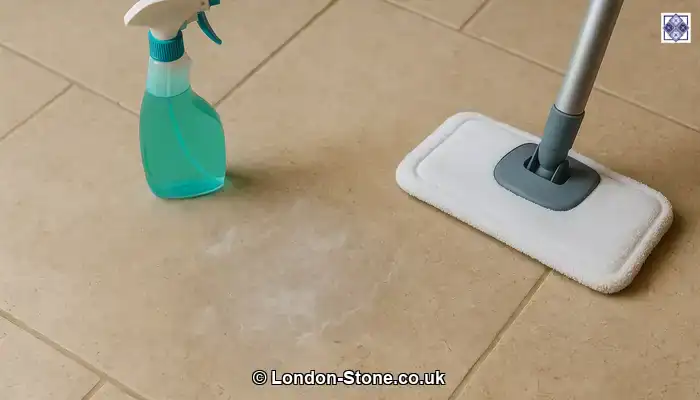
Heavy-duty limescale removers, acidic sprays and strong degreasers can etch and roughen limestone in a single use. Steam mops push hot moisture and residues deeper into the stone and grout, rather than removing them, so the floor can become chalky, cloudy, and harder to maintain with every “deep clean”.
General cleaning companies may use abrasive pads or vinyl coatings, leaving swirl marks, uneven shine, and a plastic-like finish that quickly traps dirt. Non-breathable coatings can also trap moisture in the stone, causing cloudy whitening and flaking that then require specialist stripping and re-finishing to put right.

A professional assessment checks tile type, finish, porosity, existing sealers, grout condition and any signs of damp or movement. Simple tests show how quickly the stone absorbs water and whether a slurry-weakened top layer is present, so the recommended process matches the floor’s actual condition rather than just its appearance at first glance.
Some floors respond well to a thorough alkaline deep clean and fresh impregnating sealer. Others need light honing to remove damage and restore a sound surface. Where tiles are thin or fragile, a preservation approach may be safer. You receive clear, written options so you know what is realistic, how long it should last and what care will be needed afterwards.

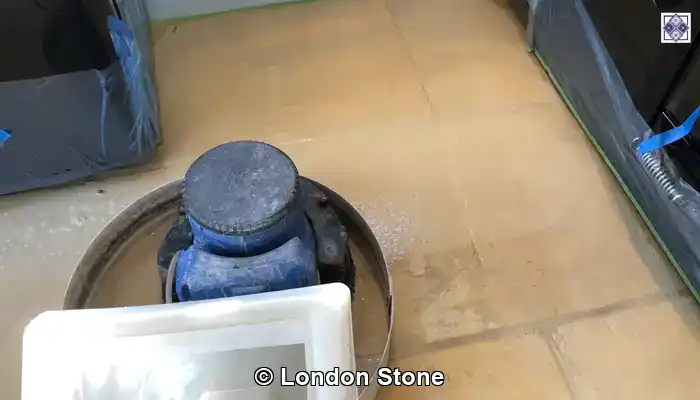
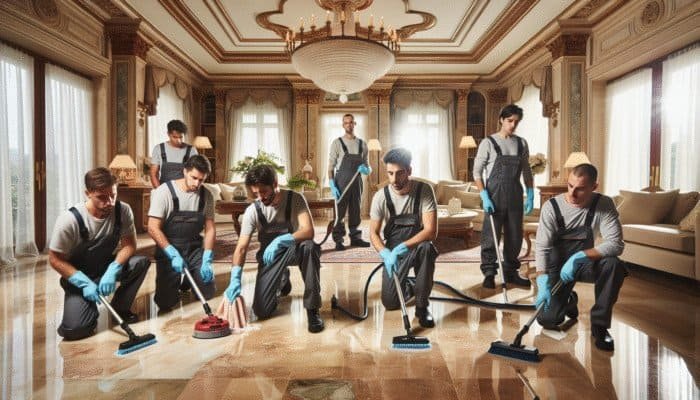
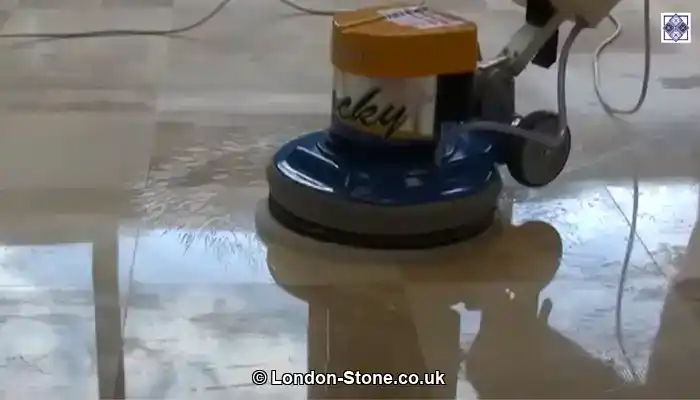
Deep cleaning uses specialist alkaline cleaners and gel strippers to loosen old detergents, grease, grime and failing sealers from the stone and grout. Rotary machines and hand tools work the solution into the surface so contamination can be lifted out, rather than diluted and left behind.
Once the soil is in suspension, the floor is thoroughly rinsed and wet-vacuumed to remove the dirty slurry before it can re-absorb. This process is repeated until the recovered water runs clear, then the limestone is allowed to dry fully. Moisture levels are checked before sealing to avoid patchy results from sealing over a damp floor.
Where the surface feels chalky or shows obvious scratches and etch marks, controlled honing is used. Diamond abrasives pass over the stone in stages, gently removing the weakened top layer and refining the surface so light reflects evenly again. This allows sealers to soak in evenly, making the floor much easier to keep clean.
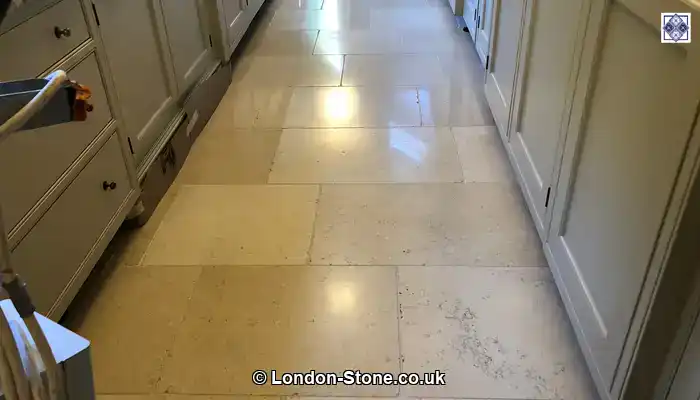
Most Buckinghamshire homes suit a honed or satin finish that looks refined but not overly shiny. Together, we choose a sheen level that works with your lighting, décor and lifestyle, so the floor feels elegant yet practical, and you are not fighting to maintain a high gloss in a busy family space.
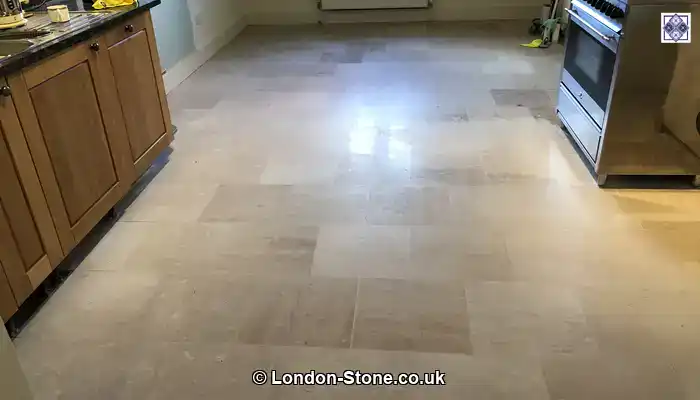
High-quality impregnating sealers soak into pores to slow staining and make cleaning easier, while maintaining a natural look. On some floors, a colour-enhancing version is used to deepen the tones and gently highlight fossil detail. Any change in appearance is explained in advance, so there are no surprises once the sealer has cured.
In very high-use kitchens or where the stone is particularly weak, an extra surface coating may be applied as a sacrificial wear layer. This is only recommended where moisture and maintenance can be managed sensibly, and you receive clear guidance on cleaning methods and when to expect top-up coats.
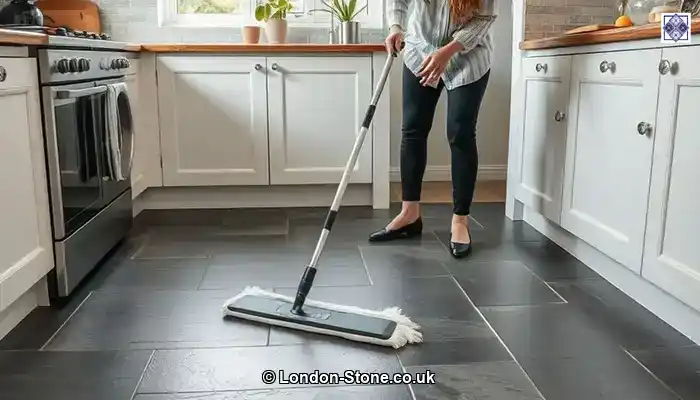
Once restored and sealed, a limestone floor is straightforward to look after. Keeping entrance mats clean, vacuuming or sweeping regularly, and mopping with a damp microfibre pad and pH-neutral stone cleaner will usually be enough to hold a fresh, even appearance without needing harsh products.
Busy kitchens typically benefit from a professional maintenance visit every 12–24 months, with high-wear areas resealed as needed. Lower-use rooms may go several years between treatments. A quick water-droplet test shows when protection is fading and helps you plan maintenance before the floor becomes difficult to maintain again.
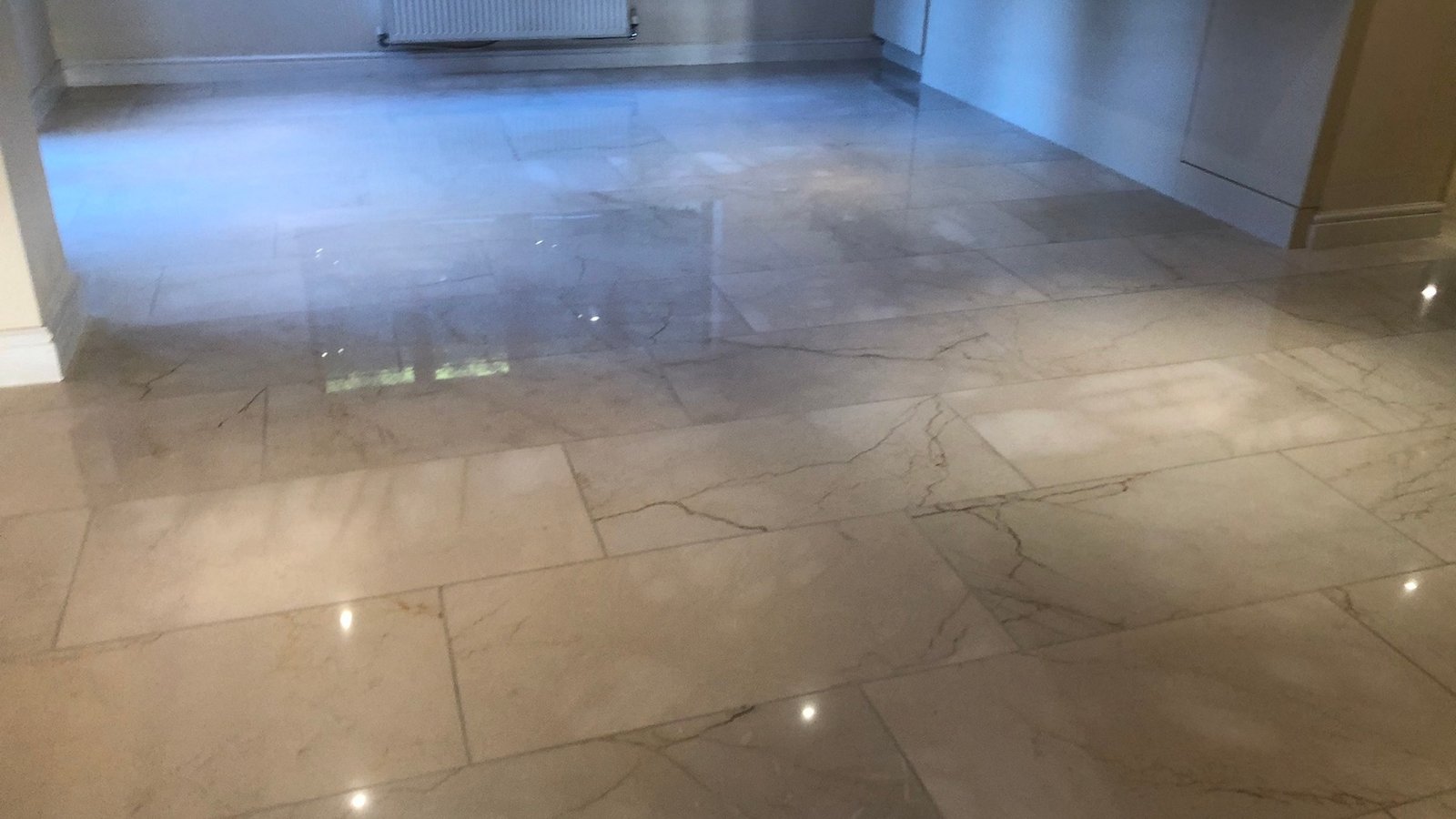
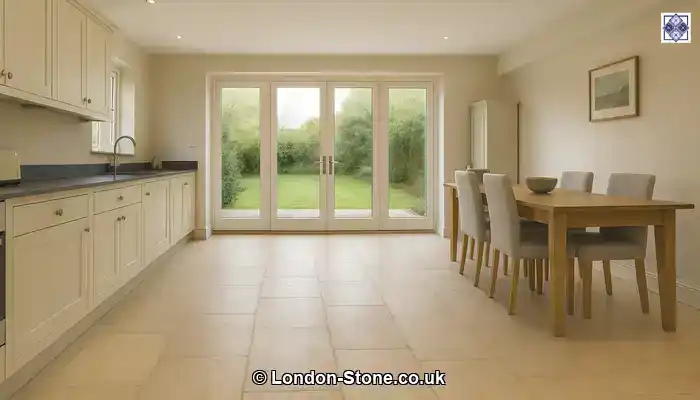
In one Buckinghamshire kitchen-diner, a pale limestone floor had turned flat and grey, with heavy traffic lanes to the garden. An alkaline purge, light honing and fresh impregnating sealer restored a soft satin finish that made the whole space feel brighter and cleaner, supported by a simple new cleaning routine.
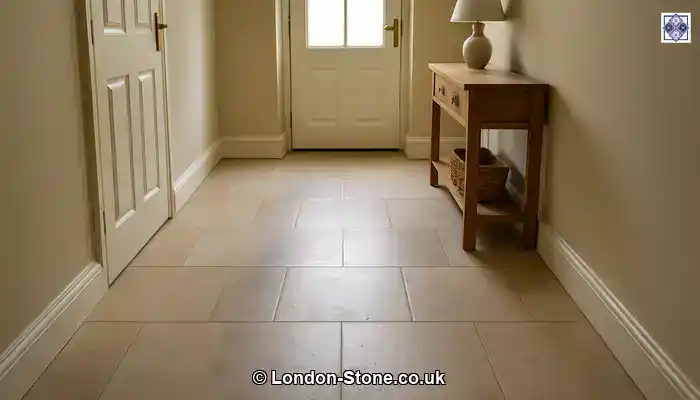
An older hallway floor showed classic slurry damage: chalky tiles, pits and patchy coatings. Full grinding was unsafe, so a gentle mix of mechanical cleaning, selective honing, localised filling and breathable sealing was used. The result was a stable, attractive floor that respected the property’s age and could be maintained with confidence.
With more than three decades of hands-on stone restoration across the UK, David Allen has worked on a huge range of limestone floors, from modern open-plan extensions to delicate older installations. This experience means recommendations are based on proven methods, not guesswork, and tailored to the way your home is used.
Work is planned to minimise disruption, protect nearby surfaces and keep your home tidy throughout the process. You can expect clear communication, agreed arrival times, careful hose routing and thorough clean-down at the end of each day, so the experience feels as calm and controlled as the finished result.
When you enquire, you will be asked a few simple questions about your floor and any past treatments. An on-site assessment is then arranged to inspect the stone, discuss options and answer your questions. Afterwards, you receive a clear, written proposal with the process, timescales, likely outcomes and investment.
Limestone floor care services are available across Buckinghamshire, supporting homeowners with honed, tumbled and brushed limestone in kitchens, halls, garden rooms and living spaces. To begin, simply request your limestone assessment and arrange a convenient time to explore what can realistically be achieved for your floor.
Deep cleaning and, if needed, light honing can remove most soil, residues, scratches and etching. Very deep stains or old chemical burns may leave a faint trace, which will be explained during your survey so you know what to expect.
Impregnating sealers work inside the stone rather than forming a shiny film, so they do not usually make the surface slippery. The chosen finish balances appearance with safe day-to-day use for families and pets.
A combined kitchen and hallway usually takes between one and three days, depending on size, condition and drying times. You will receive a realistic timeframe with your written proposal before any work is booked.
Loose items and smaller furniture are usually moved out of the way, while larger pieces are discussed during the survey so a sensible plan can be agreed. The aim is to restore as much of the floor as possible with minimal upheaval.
Products are chosen specifically for domestic environments and used in line with manufacturers’ guidance. Floors are only returned to normal use once they are clean, dry and safe, and you will be advised about any short waiting times after sealing.
Limestone floors in Buckinghamshire homes rarely fail overnight; they slowly drift from crisp and elegant to dull and difficult. That change usually reflects surface damage and tired protection, not the end of the floor’s life.
With the right assessment, cleaning, honing and sealing, many tired limestone floors can be brought back to a calm, natural beauty that feels easy to live with. The key is to treat the stone on its own terms, not as just another hard floor.
Paired with a simple, kinder maintenance routine, professional restoration can give you years of reliable service and quiet pride in your limestone, instead of ongoing frustration and worry about making the damage worse.
David Allen is a highly experienced natural stone and tile restoration specialist with more than 30 years of hands-on work in homes across the UK. He has restored everything from delicate Victorian encaustic tiles to high-value marble and limestone installations in busy family properties.
His expertise includes deep mechanical refinishing, stain and etch correction, diamond abrasive sequencing, breathable sealing systems and heritage floor restoration. Drawing on thousands of completed projects, he provides clear, practical guidance focused on safe processes, long-term protection and straightforward maintenance. His calm, reassuring approach helps homeowners understand what their stone really needs, enabling them to make confident, informed decisions.