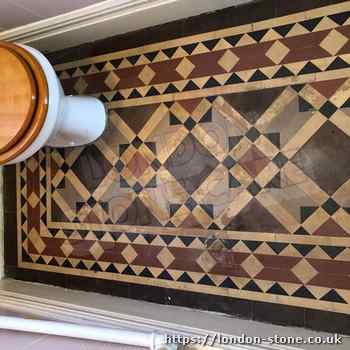
![Victorian clay tiles cleaning [xfield_location] - What is the best mop to use on ceramic tile floor](/wp-content/uploads/Victorian-Tiles-Cleaning-After-10.jpg "Victorian clay tiles cleaning [xfield_location] - Is Vinegar safe for tile")
Victorian Tiles Cleaning London
Experience The Best Quality Victorian Tiles Cleaning London.
- You are at the best place if you need Victorian tiles restoration
- Expert Victorian floor tile restoration in [location] can revitalise your Minton floor to a stunning surface.
- Our trusted experts are here that will help you with your Victorian tiles restoration, receive your quote now..
Restoring Victorian Tiles
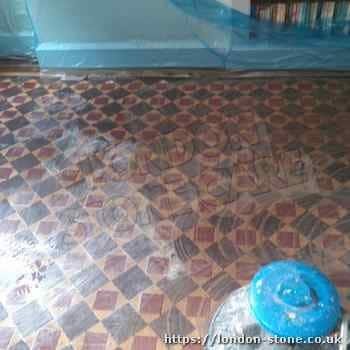
Any kind of Victorian tiles restoration service must account for the period encaustic and geometric tiles found in Victorian and Edwardian passageways. All these tiles are matt and unglazed, with all the colours resulting from the natural colours associated with the clay. If you live in an older home, you could find a stunning Victorian victorian tile corridor underneath carpet. Most of these floors look worn and gimy. Still, with changes in fashion, many hallways are actually hidden below carpet, bitumen, glue-deposits and linoleum, calling for a professional deep clean.
Known Victorian Tiles Troubles
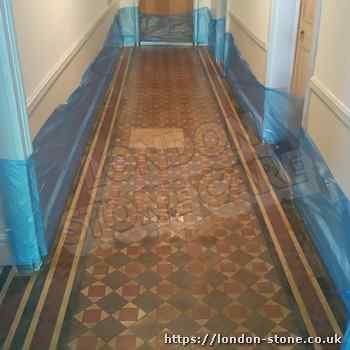
- Flat Grimy look from several years of usage.
- Paint splatters and other spills.
- Grease rust and oil marks.
- Damage and holes along the edge of the floor, originating from carpet nails.
- Past films of oil absorbed in to the body of the tiles which has turned black.
- Dirty and lost grout.
Nevertheless|Still|Nonetheless|Still|Even so|Having said that|Regardless of this}, it's still feasible to restore victorian floor tiles to a beautiful condition.
Victorian Tiles Cleaning
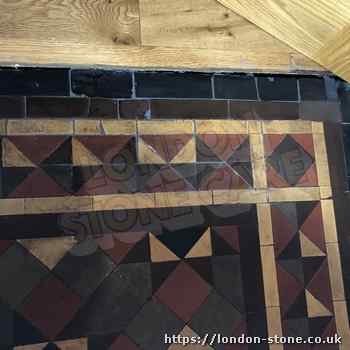
Victorian floors are produced from natural clay, therefore they are comparatively soft when compared to glazed most other ceramic and porcelain floor tiles. Abrasive restoration pads can remove a surface of a tile. Aggressive cleaning will easily take away your pattern off encaustic tiles, ruining the floor and ruining your whole look of the floor.
Water is essential in cleaning, nevertheless when restoration Victorian floor tiles, use as little as you can. Victorian floor tiles in many cases are on old permeable, unstable sub-floors. So water must not soak on the sub-floor. Too much water will impact the sub-floor, lifting individual floor tiles or whole regions of your floor.
Cleaning Minton Tiles

If a victorian tile floor is extremely soiled with old sealer residues, you should make contact with a professional Victorian tiles cleaning service. They will have the equipment and most importantly the knowledge to clean heavily soiled floors, without causing irreparable damage.
The company will start with getting rid of the old coatings. They have access to different coating and sealer treatments to strip old [xfield_gluetar] coatings. The coatings removers are left to work for twenty minutes or possibly overnight to work into and soften the old coatings and adhesives.
Rotary scrubbing equipment with various grades of pads and brushes break away the residues. Then wash off with water and vacuum the residues. Repeat the process to get rid of all residues for the old coatings. Hand pads and hand scrubbing brushes are useful get at the remaining coating residues.
Contact Us Now!
Get a free stone floor cleaning London quote now.
Grouting Victorian Tiles
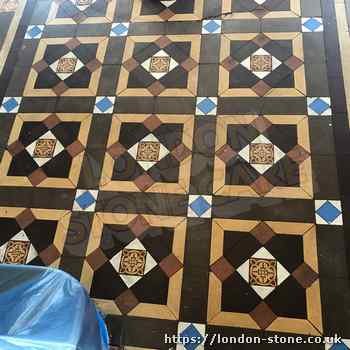
Victorian tile floors often suffer a certain amount of shifting, opening up the grout and in some cases, dislodging or fracturing tiles.
Gaps should be filled with grout to help in stabilising the floor.
Then leave the floor to dry ready to be sealed.
Sealing Victorian Floor Tiles

Originally Victorian tiles were sealed with a linseed oil and waxed. To start with, the boiled linseed oil enhances the tones in the , still eventually, the boiled linseed oil oxidises and affects the colours. Using boiled linseed oil is risky when you don't use the proper precautions. Oil laden cloths can start to burn spontaneously. Modern-day sealers are safer, supply greater protection as they are simpler to apply.
Encaustic Tiles Cleaning
Encaustic cement tiles are becoming more popular. These cement tiles may have forms and colours mechanically pressed onto the surface and some are also painted by hand.
Like many ceramic tiles, Encaustic tiles are typically fairly simple to clean, and need minimal routine maintenance. But, as they are made of cement, they're permiable and so must certanly be sealed in order to avoid soil getting trapped in the tile.
After cleaning, the initial colours within the floor can look washed-out, so we recommend putting on a colour intensifying sealer to revive the the original colours.