December 19, 2025 by
David Allen
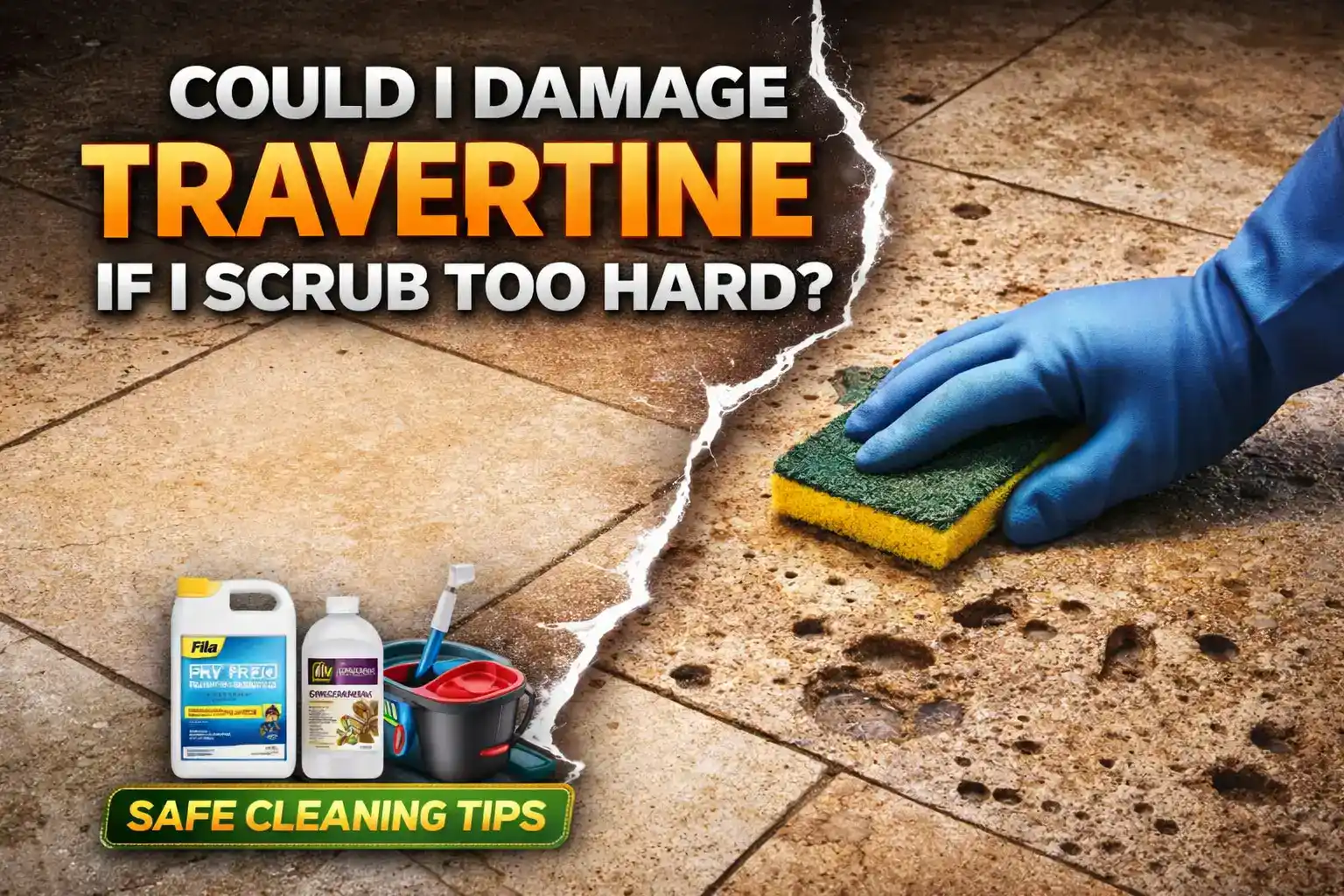
You are not imagining it. One determined cleaning session with a stiff brush can leave your travertine looking worse than when you started. Because travertine is full of tiny voids just beneath a thin surface crust, heavy scrubbing and the wrong pads can roughen the tile’s face, strip away protection, and open new pits that catch dirt.
 Fila Pro Floor Cleaner |  LTP MPG Sealer H20 |  Vileda H2PrO Spin Mop System |
This article explains, in plain language, how scrubbing can damage travertine, what warning signs to look for, and how to clean it safely without risking your floor. By the end, you will know when a gentle approach is enough and when it is time to stop and ask a specialist for help.

Travertine does not behave like a solid, glassy tile. It is more like a crunchy bar of honeycomb covered in a thin shell. Under the smooth surface lies a network of voids and weak spots. When you scrub hard with the wrong pad, you are not just removing dirt; you are wearing away that thin shell and disturbing what lies underneath.
On top of the stone, you also have a sealer, which acts as the first line of defence. Aggressive scrubbing can strip or patch that sealer, leaving some tiles more exposed than others. The result is an uneven finish: some areas absorb water and dirt quickly, while others still repel it. That is why floors can look blotchy and dirty again soon after cleaning, even though you have worked hard on them.
Travertine forms in mineral-rich hot springs, where escaping gas leaves pockets and tunnels in the stone. At the factory, many of these voids are filled with resin or grout, then honed to a smooth finish. However, just below the surface, there are always more cavities waiting. Think of a chocolate bar with honeycomb inside: if you scrape the top too much, you break into the bubbly centre.
When heavy scrubbing or strong abrasives cut through the top layer, those hidden voids are exposed as new pits and tiny holes. Dirt collects in them almost immediately, so the floor can look worse, not better. Once those pits are open, only proper cleaning, refilling, and resealing will bring the surface back under control.
Many standard pads and sponges are designed to bite into the surface. Green kitchen pads, scourers, and “heavy-duty” floor pads all act like fine sandpaper. On hard porcelain, they may scuff off a mark. On soft, porous travertine, they can cut right through the surface caps that sit over the voids.
As you scrub, you may notice a patch becoming rougher or more matte than the surrounding area. That change in texture indicates that the stone’s top has been opened up. Each additional pass of an abrasive pad deepens the problem, making the stone more absorbent and harder to clean next time.

It is not always apparent in the moment that you are overdoing it. Often, the damage shows itself as the floor dries or over the following days. Understanding the visible signs will help you spot trouble early and avoid making the same area worse by going back over it again and again.
One common sign is a patch that dries lighter and chalkier than the surrounding tiles. Instead of a soft, even sheen, the surface looks flat and lifeless. You may also see new, tiny dark pinholes that weren’t there before, particularly along traffic lanes or where you focused your scrubbing. These are the newly opened voids, which are filling with soil.
There are several clear clues that scrubbing is starting to damage your travertine rather than simply cleaning it:
If you notice one or more of these changes, continuing with the same pad or pressure will only increase the damage. At that point, the issue is no longer just dirt on the surface; the surface itself has been altered.

Not all cleaning tools are equal when it comes to travertine. Some items that feel normal in a bathroom or kitchen can be far too aggressive on a soft, porous stone. The risk comes from a mix of mechanical abrasion and harsh chemistry. When both are present, damage happens quickly.
On the mechanical side, green and darker floor pads, stiff deck brushes, scouring sponges, and “magic” eraser blocks can all scratch the surface. Cream cleansers and powder cleaners often contain fine abrasive grains, which act like liquid sandpaper as you rub them in. If a product feels gritty between your fingers, it is best kept away from travertine.
Chemically, any cleaner that is sold for removing limescale or rust is likely to be acidic, which travertine does not tolerate. Strong bleach, heavy-duty degreasers, and bathroom sprays that promise to “dissolve dirt” can also weaken fillers and strip sealers. When these products are combined with forceful scrubbing, they can leave dull etched patches and open pits that will not respond to regular cleaning.
Safe cleaning is about letting the product and dwell time do most of the work, while you guide the process with gentle, controlled movement. Instead of scrubbing one stubborn mark until your arm aches, it is better to loosen the soil across a wider area and remove it with good rinsing and extraction.
Start by vacuuming or sweeping thoroughly to remove grit that can scratch the surface. Then apply a diluted pH-neutral stone cleaner according to the label directions. Allow it to sit on the floor for a few minutes to soften the soil in the pores and joints. Use a microfibre mop, soft cloth, or very soft brush to move the solution around with light, even strokes.
Work in small sections so you can pick up the dirty solution before it dries back into the pits. Wring the mop frequently, change the water often, and finish with a clean rinse. The goal is always to lift and carry the soil away, not to grind it into the stone.
Different finishes tolerate different levels of agitation. A honed and filled travertine with most holes closed can withstand gentle brushing or a soft white pad, provided you use light pressure. A tumbled or brushed travertine with open texture needs even more care, because stiff bristles can dig into the raised edges and deepen the texture.
Polished travertine is the most sensitive. Any abrasive pad or strong scrubbing motion will quickly dull the shine and reveal fine scratches in the light. On this type of floor, stick to very soft microfibre and neutral cleaner, and avoid spot-scrubbing altogether. If marks do not move with that approach, it usually means the surface has been etched or scratched and needs professional refinishing rather than more effort on your part.
There comes a point at which more DIY effort will not improve the floor, and may even make things worse. Knowing when to stop protects both your travertine and your peace of mind. A specialist has the tools and experience to correct issues that ordinary cleaning cannot reach.
It is time to pause and seek professional advice if you see dull etched rings from toiletries or cleaners, broad areas of scratching that catch the light, or patches of heavy pitting that are getting larger. Likewise, if old coatings are flaking, grout is crumbling, or tiles sound hollow or move slightly underfoot, scrubbing is not the answer. Those are structural or finishing problems, not cleaning problems.
A travertine specialist will inspect the floor, test its reaction to different products, and plan a controlled process: deep cleaning, refilling, gentle honing where needed, and sealing with a breathable impregnator. That type of work cannot be achieved with household brushes and supermarket products, however hard you scrub.
Once you understand how easily travertine can be marked by heavy scrubbing, prevention becomes much simpler. A few consistent habits will keep the surface protected and reduce the need for “future rescue” cleaning sessions.
Use entry mats at doors to prevent grit from being tracked across the floor, and always lift furniture rather than dragging it. Fit felt pads to chair and table legs in dining areas and kitchens. Stick to pH-neutral stone cleaner for regular mopping and avoid steam cleaners altogether, as they push hot moisture into the stone and grout.
From time to time, arrange a professional deep clean and check whether the sealer is still doing its job. When the floor is cleaned correctly, any pits refilled, and the stone resealed, day-to-day care becomes easier and far less risky. Light, regular maintenance will then be all that is needed to keep your travertine looking elegant and well cared for.
Can A Soft Scrubbing Brush Damage Travertine?
A genuinely soft brush, used with light pressure and a neutral cleaner, is unlikely to cause severe damage on its own. Problems start when the bristles are stiff, the pressure is high, or the same area is scrubbed repeatedly. If the surface begins to feel rougher or you notice new pits appearing, stop immediately and switch to microfibre and a gentler movement.
Will Aa Cream Cleaner or a Scouring Pad Harm Travertine Tiles
Most cream cleaners and scouring pads are too abrasive for travertine. They contain tiny particles that scratch the surface and can break the thin caps over the stone’s internal voids. Even if they remove a mark in the short term, they often leave a dull patch that collects dirt more quickly. It is safer to avoid them and use products designed for natural stone instead.
Is It Safe To Use A Steam Mop On Travertine Floors?
Steam mops are not recommended on travertine. The combination of heat and pressure can drive moisture into the pores and grout, weakening fillers and affecting the sealer. Over time, this can lead to dark patches, loose filler, and increased pitting. A neutral cleaner and microfibre mop are far kinder to the stone and easier to control.
How Can I Tell If I Have Already Damaged My Travertine?
Signs of damage include new rough or chalky patches, pinholes that darken quickly, dull rings from toiletries or cleaners, and scratch lines that stay visible no matter how often you clean. If you can feel a change in texture with your hand, or see marks clearly in reflected light, it is likely that the surface has been altered rather than just soiled.
What Should I Do If Scrubbing Has Left A Dull Patch?
Do not try to polish the area yourself with stronger pads or products. Instead, stop using that section as a test area, return to gentle cleaning, and contact a specialist for advice. In many cases, a professional can lightly hone and refinish the damaged patch, refill any opened pits, and blend it back into the surrounding floor.
Travertine is a beautiful but sensitive stone. Its internal voids and soft surface mean that heavy scrubbing, scouring pads, and harsh cleaners can easily shift you from cleaning into damage without much warning. Once the surface caps are broken and the sealer is patchy, the floor becomes more complex to live with and more challenging to put right on your own.
The safest approach is to let suitable products and good technique do the work, not your elbow. Gentle agitation, thorough rinsing, and regular light maintenance will protect both the stone and your investment. When problems move beyond normal soil and into dullness, pitting, or etching, a professional restoration becomes the most effective and least risky option.
Handled with understanding and care, travertine can remain elegant and welcoming for many years without ever needing to be scrubbed into submission.
David Allen is a natural stone and tile restoration specialist with over 30 years of hands-on experience working in homes throughout the UK. Over thousands of projects, he has restored, protected, and preserved a wide range of surfaces, from delicate Victorian encaustic tiles to high-value marble, limestone, and travertine floors.
His practical expertise covers deep mechanical refinishing, stain and etch correction, diamond abrasive sequencing, breathable sealing systems, and the specialist repair of heritage flooring. Known for clear, calm explanations, he focuses on safe processes, long-term protection, and straightforward maintenance advice that helps homeowners avoid unnecessary damage and make confident decisions about caring for their stone and tile.
